


The Parent You Strive to Be: A Mindful Parenting Guide
The Parent You Strive to Be: A Mindful Parenting Guide
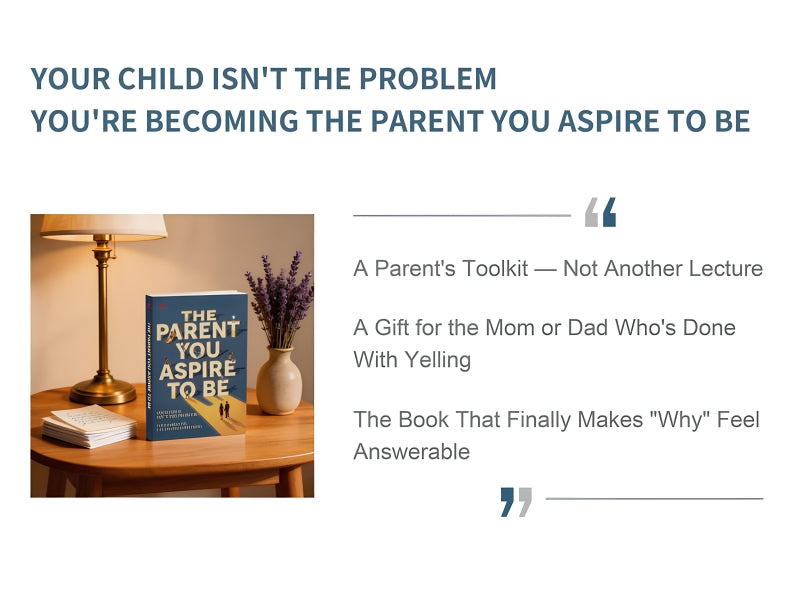
🗣️ Real "say this, not that" scripts for meltdowns, backtalk, and bad language
🧠 Turn discipline into trust — no more yelling, regretting, apologizing
💛 Stop passing down what was never yours to carry
Couldn't load pickup availability

The Parent You Strive to Be: A Mindful Parenting Guide
"No dense theory—just simple 'say this, not that' scripts. It completely stopped the daily yelling match at mealtime with my 3-year-old on day one."
Product Details
Product Details
The Parent You Aspire To Be, by Miles Carter, is a practical parenting guide for the mom or dad who's tired of yelling, regretting, and apologizing. Instead of theory, you get real "say this, not that" scripts you can use the next time your child melts down, talks back, or shuts you out — turning negative commands into positive reinforcement and discipline into trust. Across 150+ pages and structured chapters on behavior modification, emotional management, and parent-child communication, this book shows you how to stop passing down what was never yours to carry and start building the calm, connected relationship you actually want with your child. Your child isn't the problem — your parenting can change everything.
Shipping & Delivery
Shipping & Delivery
Orders ship within 1-2 business days of purchase. Delivery typically takes 7-12 business days depending on your location. You'll receive a tracking number by email as soon as your order ships, so you can follow it every step of the way.
Return & Refund Policy
Return & Refund Policy
Not what you expected? You have 30 days from the delivery date to return it for a full refund. If your book arrives damaged or defective, contact us first and we'll send a replacement or refund — no need to return the shipment. Reach out to our support team to start any return.



YOUR CHILD ISN'T THE PROBLEM. YOUR PARENTING CAN CHANGE EVERYTHING.
Turn Discipline Into Trust
Don't say "Stop crying! You're overreacting." Say "I see you're upset. I'm here if you need me." Don't say "Put that down! And come here right now!" Say "I see you're focused on that. Dinner's in 5 minutes."
These aren't abstract theories — they're real scripts you can use tonight. Every chapter turns a negative command into positive reinforcement, so you can stop reacting and start connecting.

Written For The Parent Who's Tired Of Yelling, Regretting, and Apologizing
The Parent You Aspire To Be doesn't sell you a fantasy of the "perfect parent." It shows you exactly what to say in the moments that break you down — the meltdowns, the backtalk, the bad language, the phone addiction — so you can respond instead of react.
Generational trauma can be stopped when you stop passing it on. This book is built on one core idea: your child isn't the problem, your parenting can change everything. Chapter by chapter, you'll learn to regulate your child's nervous system, hold firm and kind boundaries, and build the kind of home that's a support, not a restraint.
150+ pages, organized into clear chapters on behavior modification, emotional management, and communication — no academic jargon, no filler, just real strategies for real moments.

QUICK ANSWERS ABOUT THIS BOOK
What will you find inside The Parent You Aspire To Be?
What will you find inside The Parent You Aspire To Be?
Chapters organized around behavior modification, emotional management, and parent-child communication — plus real "say this, not that" scripts for the moments that break most parents down, like meltdowns, backtalk, and bad language. The book teaches you to turn negative commands into positive reinforcement and discipline into trust.
Who is this book for?
Who is this book for?
First-time parents, parents of toddlers, and parents of multiple young kids who are tired of the yelling, regretting, and apologizing cycle — and who want to raise their child differently than they were raised.
Is this a dense psychology book or something practical?
Is this a dense psychology book or something practical?
Practical and direct. No academic jargon or abstract theory — real scripts and clear strategies you can use the same day you read them.
Does it include real scripts I can use right away?
Does it include real scripts I can use right away?
Yes. The book is built around side-by-side "incorrect wording vs. correct wording" examples — like swapping "Stop crying, you're overreacting" for "I see you're upset, I'm here if you need me" — so you always know exactly what to say next.